
The Contractor’s Bond Readiness Checklist: 6 Steps to Prepare Before You Bid
Winning a project often comes down to more than having the lowest bid. If the project requires surety bonds, you’ll also need to demonstrate that your business is financially stable, experienced, and prepared to complete the work successfully.
Unfortunately, many contractors wait until the last minute to think about bonding. That can lead to unnecessary delays, additional paperwork, or even missed bidding opportunities.
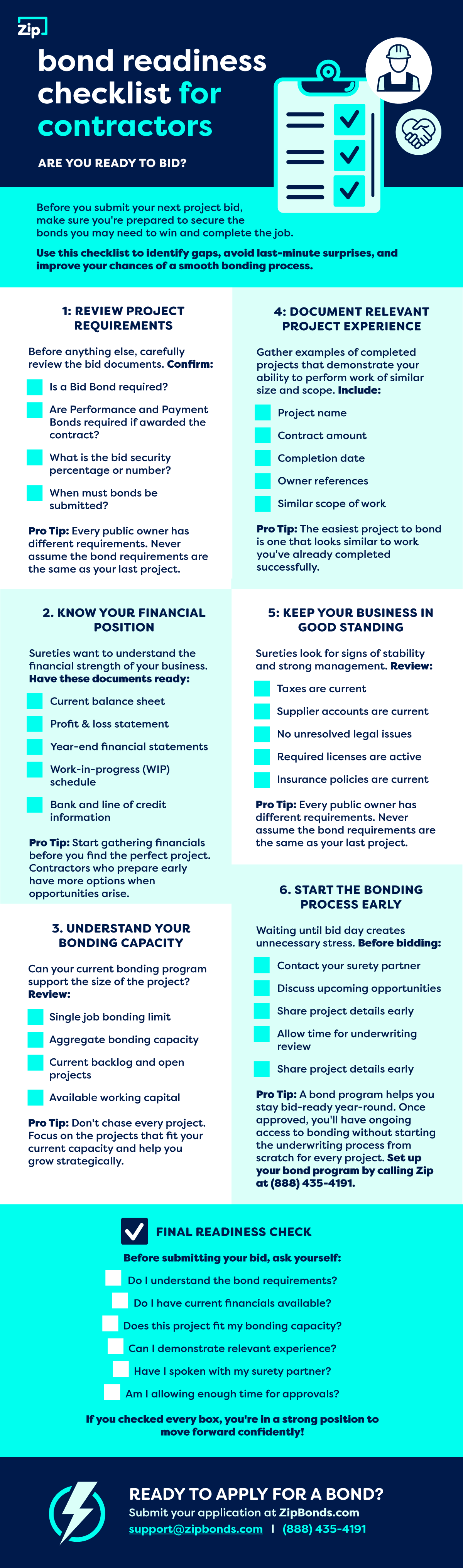
To help you prepare, we’ve created a simple Contractor Bond Readiness Checklist that walks through the key areas underwriters typically review before issuing bid, performance, and payment bonds.
Whether you’re pursuing your first bonded project or looking to streamline your bonding process, this checklist can help you get organized before your next bid.
Download the free Bond Readiness Checklist below and follow along as we explain each step.
Why Bond Readiness Matters
Being “bond ready” means your business is prepared to qualify for the bonds required on a project.
The more organized and prepared you are before bidding, the smoother the bonding process is likely to be. Instead of scrambling to gather documents after winning a project, you’ll already have much of the information underwriters need.
That can mean:
- Faster bond approvals
- Fewer underwriting questions
- Less stress before bid deadlines
- Greater confidence when pursuing larger opportunities
Think of bond readiness as preparing your business before opportunity knocks—not after.
Fast Track Your Approval: ZipBonds offers a Quick Start Program where contractors can pre-qualify for bonds in 3 minutes or less!
Step 1: Review the Project Requirements
Every project is different.
Before requesting a bond, carefully review the bid documents so you understand:
- Which bonds are required
- Required bond amounts
- Bid submission deadlines
- Project size and contract value
- Any owner-specific bond forms
Knowing these details upfront helps avoid delays and ensures your surety provider has everything needed to issue the correct bond.
Step 2: Understand Your Financial Position
Financial strength plays an important role in most bonding decisions.
That doesn’t necessarily mean you need perfect financial statements, but you should know where your business stands before applying.
Depending on the size of the project, you may be asked for:
- Business financial statements
- Business tax returns
- Personal financial information
- A work-in-progress schedule
- Bank references
Keeping these documents updated throughout the year can significantly speed up the underwriting process.
Quick Tip: Don’t wait until bid week to organize your financials. Maintaining current records year-round makes bonding much easier.
Step 3: Know Your Bonding Capacity
Winning work is exciting—but taking on too much too quickly can create challenges.
Before bidding, ask yourself:
- Is this larger than projects I’ve completed before?
- Do I have enough crews and equipment?
- How much bonded work am I already performing?
- Can I successfully complete this project while managing existing commitments?
Sureties evaluate whether a contractor has the bonding capacity—not just financially, but operationally—to complete the work successfully.
Step 4: Document Your Experience
Past performance is one of the strongest indicators of future success.
Underwriters often look for evidence that you’ve successfully completed projects with similar:
- Contract values
- Scope of work
- Project types
- Owners
- Delivery methods
If you’re growing into larger projects, be prepared to explain how your team, resources, and management experience support that next step.
Step 5: Keep Your Business in Good Standing
Strong contractors make bonding easier by staying proactive.
Before requesting bonds, verify that:
- Your contractor license is active
- Business insurance is current
- Tax obligations are up to date
- Company information is accurate
- Any legal matters have been addressed
Small administrative issues can create unnecessary delays if discovered during underwriting.
Step 6: Start the Bonding Process Early
This is one of the biggest opportunities contractors miss.
Many companies wait until they need a bond to begin the approval process. Instead, consider establishing a bond program before you’re actively bidding.
A bond program helps determine your bonding capacity in advance, making future bond requests faster and more predictable.
Instead of starting from scratch every time an opportunity arises, you’ll already have an established relationship with your surety partner and a clear understanding of the types of projects your company is qualified to pursue.
For contractors planning to bid regularly, this can become a significant competitive advantage.
Fast Track Your Approval: ZipBonds offers a Quick Start Program where contractors can pre-qualify for bonds in 3 minutes or less!
Download the Free Bond Readiness Checklist
Use this checklist before every major bid to ensure your business is prepared.
The checklist covers:
- Project requirements
- Financial readiness
- Bonding capacity
- Project experience
- Business compliance
- Bond program preparation
Frequently Asked Questions
What does it mean to be bond ready?
Being bond ready means your business has the financial strength, experience, and documentation necessary to qualify for the bonds required on construction projects.
Do I need a bond program before bidding?
Not always, but contractors who bid regularly often benefit from establishing a bond program in advance. It can streamline future bond requests and help you understand your bonding capacity before opportunities arise.
What documents are usually required for bonding?
Requirements vary based on project size and contractor experience, but common items include financial statements, company information, contractor licenses, work history, and details about the project being bonded.
Does being bond ready guarantee approval?
No. Every bond request is evaluated individually, and approval depends on factors such as financial strength, experience, project details, and underwriting requirements. However, being prepared can help make the process smoother and faster.
Don’t Wait Until Bid Day
The best time to prepare for bonding is before you need it.
Whether you’re pursuing your first bonded project or growing into larger opportunities, having your financials organized, your company information up to date, and a bond program in place can help eliminate last-minute surprises.
At ZipBonds, we help contractors understand the bonding process, prepare for underwriting, and build bond programs that support long-term growth.
Download the Contractor Bond Readiness Checklist and keep it handy before every project you bid.