BEAD Program Surety Bonds for Broadband & Fiber-Optics Contractors
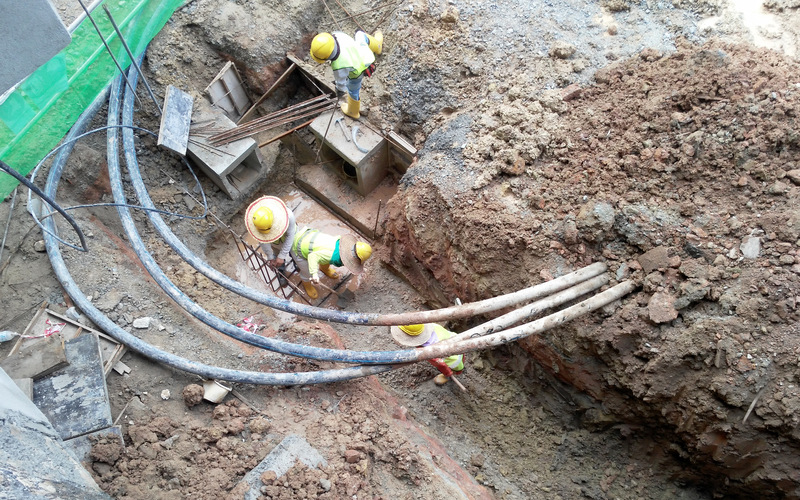
America is investing over $42.45 billion to bring high-speed internet to every community — and contractors that want to build that infrastructure will often need surety bonds to qualify for funding and contracts. These are commonly referred to as BEAD Bonds.
Whether you install fiber, place conduit, trench lines, or manage full broadband infrastructure projects, if the work is funded through the Broadband Equity, Access, and Deployment (BEAD) Program, a bond may be required to guarantee contract performance, payment to subs and suppliers, and regulatory compliance.
To apply for this type of bond, please email us at support@zipbonds.com.
What is the BEAD Program?
The BEAD Program is a federal initiative overseen by the National Telecommunications and Information Administration (NTIA) under the U.S. Department of Commerce. Its goal is to expand high-speed internet access across unserved and underserved areas of the United States.
- Total Funding: $42.45 billion
- Launched: 2021 under the Infrastructure Investment and Jobs Act (IIJA)
- Administered by: NTIA nationally + each state’s broadband office locally
- Purpose: Build broadband networks, extend fiber, upgrade existing infrastructure, and bring internet access to rural and low-income areas.
Each state received a funding allocation and submitted a 5-year action plan to the NTIA, outlining how funds would be awarded and how contractors and internet service providers (ISPs) would be vetted.
Get Your BEAD Program Surety Bond:
Why are surety bonds required for BEAD Program projects?
Many states now require contractors participating in BEAD-funded broadband construction to post surety bonds, similar to traditional public construction projects. These bonds protect taxpayer dollars and ensure work is completed properly. They:
- Guarantee the contractor completes the project (Performance Bond)
- Ensure subcontractors and suppliers are paid (Payment Bond)
- Hold providers accountable to grant terms or compliance rules (Compliance/Maintenance Bonds)
- Meet state-specific requirements for funding reimbursement
Why now?
In 2023–2024, states began awarding BEAD program grants and selecting providers. Only recently have bond requirements been enforced at the contract level, which is why BEAD-related bond activity is just now ramping up across the surety industry. To apply for this type of bond, email us at support@zipbonds.com.
Who needs a BEAD Program surety bond?
Anyone performing construction or installation work under a BEAD-funded project may be required to obtain a bond.
This usually includes:
Entity | Need a bond? | Notes |
|---|---|---|
| Internet Service Providers (ISPs) | Sometimes | If they are the direct recipient of BEAD funds and self-performing the work |
| Prime Contractors (fiber, utility, electrical, civil contractors) | Yes — most commonly | Typically the entity providing the surety bond |
| Subcontractors | Only if required by prime or state | Example: directional drilling, aerial fiber installation, utility boring |
| Local governments or cooperatives | No bond is needed, but contractors are required to bond the work |
Important clarification: States issue BEAD funds to providers (such as power companies, co-ops, telecoms), but those entities hire contractors, and those contractors must provide the bonds.
Is a BEAD bond a contract bond or a commercial bond?
This has been a big question in the industry — is a BEAD bond a contract bond or a commercial bond?
Here’s how it breaks down:
If… | Bond Type |
|---|---|
| A contractor is hired to install fiber, trench conduit, or build infrastructure under a BEAD-funded contract | Contract Bond (Performance & Payment) |
| An internet provider (ISP) receives BEAD money directly and must guarantee that it will build the network over time | Commercial/Compliance Bond |
| A utility company or co-op distributes BEAD funds and manages compliance | May require a commercial compliance bond or require bonded contractors instead |
In short:
- If the principal is the internet service provider, it’s usually a commercial bond.
- If the principal is the contractor doing the work, it’s typically a contract performance and payment bond.
Types of BEAD-Related Bonds
Most states use standard public works bonding requirements adapted for broadband work. You may see:
Bond Type | Purpose |
|---|---|
| Bid Bond | Guarantees a contractor will enter the contract if selected (optional in some states). |
| Performance Bond | Ensures the project is completed per contract terms and scope. |
| Payment Bond | Guarantees subs and suppliers are paid. |
| Maintenance/Warranty Bond | Covers workmanship defects after completion. |
| Compliance Bond | Surety guarantees the provider or contractor meets BEAD program rules or service commitments. |
How to Get a BEAD Bond (The ZipBonds Process)
Getting your bond for a BEAD broadband project doesn’t have to be complicated. Here’s how we make the process fast and contractor-friendly.
1. Email or call our team.
Shoot us an email or call us directly at 888-435-4191. We’ll ask you to provide basic information like:
- Contract or grant amount
- Scope of work (fiber, trenching, aerial installation, etc.)
- Business financials and work history
- BEAD award documentation, if available
To apply, email us at support@zipbonds.com.
2. We build your case for approval.
Unlike many surety agencies, we don’t just submit numbers. We tell your story to surety carriers, including information like:
- Past project experience
- Capacity to take on larger work
- BEAD funding timeline and payout structure
- If needed, we use the SBA Bond Guarantee Program to improve approval chances
3. We approve and issue your bond.
Once approved, we issue the bond to you or directly to the obligee (state, ISP, utility, co-op, etc.). Digital bonds are available in most states for faster submission.
Why work with ZipBonds for BEAD Program bonds?
Licensed in All 50 States
Many BEAD contractors will work across state lines. We’re already approved with major carriers nationwide.
Fast Turnaround, Even for Larger Contracts
We know BEAD deadlines are rigid. We expedite underwriting when awards are announced.
Experience with Contract and Commercial Crossover Bonds
Because BEAD sits between public infrastructure and private telecom, it can fall into either bond type. Our underwriting partners know this space.
SBA and Mid-market Options Available
If a contractor doesn’t qualify under traditional criteria, we use the SBA Bond Guarantee Program to obtain approval.
BEAD Program Bond FAQ (Frequently Asked Questions)
What exactly is a BEAD bond?
A BEAD bond is a surety bond required for contractors or providers working on broadband infrastructure projects funded by the Broadband Equity, Access, and Deployment Program.
Do all BEAD projects require bonds?
Most construction-related projects do. However, requirements vary by state, award size, and whether the provider is self-performing or subcontracting work.
Is this a contract bond or a commercial bond?
It depends:
- If a contractor is building the infrastructure: contract performance/payment bond.
- If a provider or utility is guaranteeing long-term performance of BEAD funds: commercial/compliance bond.
Who requires the bond — the federal government or the state?
The NTIA funds the program, but each state sets its own bond requirements through its broadband office.
Who is the bond obligee (the entity receiving protection)?
Typically:
- State broadband office
- Electric co-op or utility receiving BEAD funds
- Municipal authority or public works department
How much does a BEAD bond cost?
Bond premium is usually 1–3% of the contract amount for qualified contractors. Rates depend on credit, financial strength, and project size.
What financial information do I need to qualify?
- Business financial statements
- Personal financial statement (for owners)
- Work-in-progress (WIP) schedule
- Project contract or BEAD award letter
Can small contractors qualify for BEAD bonds?
Yes — especially with support from the SBA Bond Guarantee Program, which backs up to 90% of the bond to help newer or growing contractors.
Are bonds needed for fiber maintenance or installation only?
Most commonly for construction, trenching, aerial work, and fiber placement, but maintenance warranties or compliance bonds may also apply.
What happens if a contractor defaults on a BEAD project?
The surety (bond company) steps in to:
- Finance the contractor,
- Hire a replacement, or
- Pay damages up to the bond limit.
Is bonding required for every project size?
Many states set thresholds. For example, projects under $100,000 may waive bonds, while larger BEAD-funded projects require full performance and payment bonds.
Do subcontractors need BEAD bonds?
Only if required by the prime contractor or contract terms. Subcontractors typically fall under the prime’s bond.
Are bond requirements the same in every state?
No — each state has its own BEAD implementation plan. Some have published bonding requirements; others will specify during the award phase.
How long does it take to get bonded?
- Simple bonds under $500K: 1-2 days
- Larger or complex bonds: 2-3 business days
- SBA-backed bonds: May take slightly longer

Get Your Surety Bond Today
ZipBonds offers the fastest and most secure option for getting bonded. Our all-digital platform is intuitive and straightforward. Apply online, email support@zipbonds.com or call 888.435.4191 to speak with an agent directly.
About ZipBonds.com
Founders Ryan Swalve and Zach Mefferd formed the vision for ZipBonds.com when they realized how overly complicated it was to help clients place surety. The frustration of being unable to incorporate the technology they’d used in other insurance-focused projects left them thinking “there has to be a better way.”
Fast forward a couple of years, and that better way is the impetus of everything we do at ZipBonds. We constantly look for innovative ways to improve the bonding process for our clients and agents. Our team comprises individuals who understand all angles of surety – for companies, agencies, and individuals. Incorporating everyone’s point of view to improve the process while simultaneously integrating cutting-edge technology is what sets our business apart.